
High Functioning is Not the Same as Thriving
The particular and cruel exhaustion of women who are exceptional at everything except stopping.
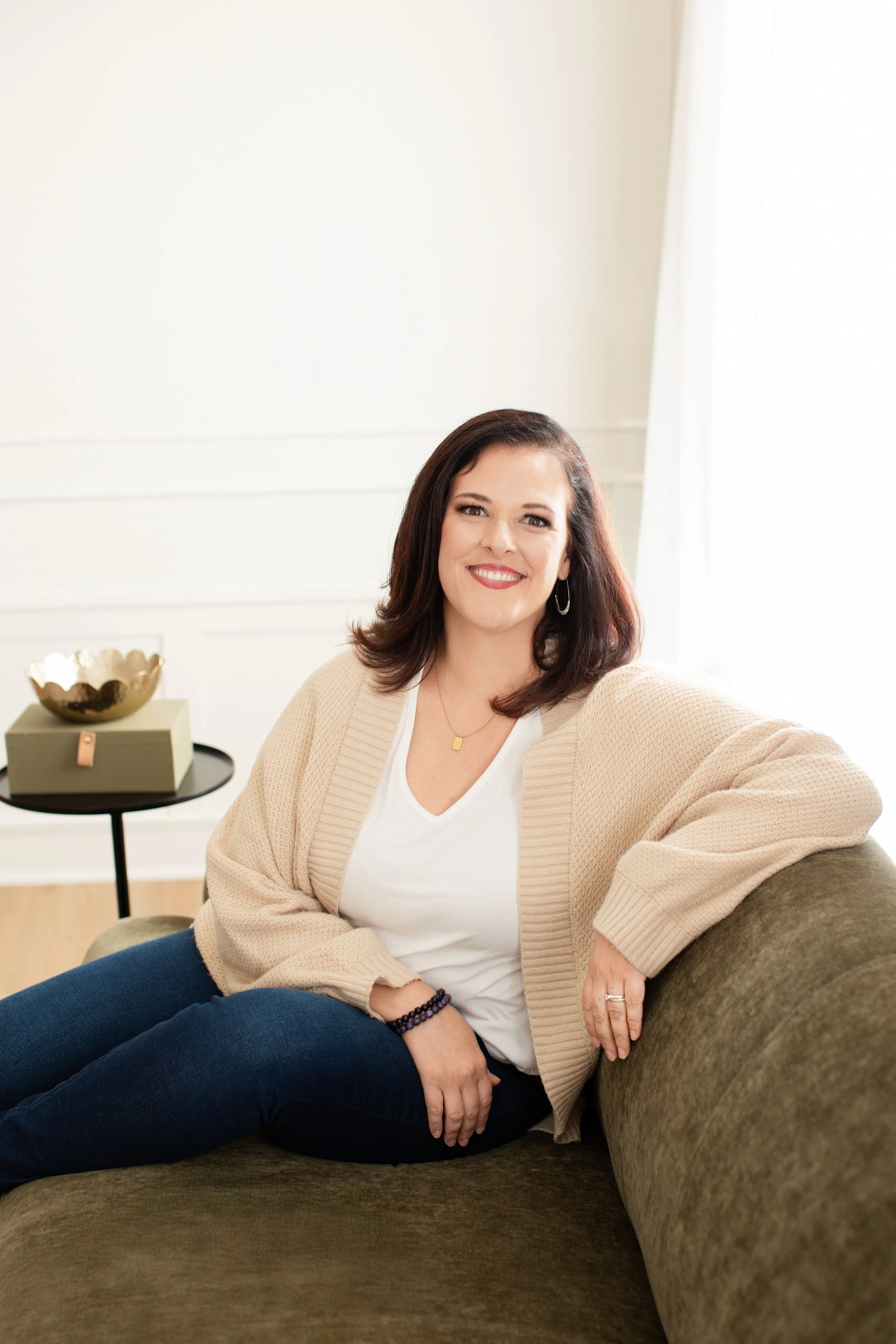
By Emma Mulvany | Women's Empowerment Mentor
Are you the one everyone calls?
Are you at the top of the list when a position needs filling, an event needs organizing, or a neighbor needs support?
Maybe you lead the committee, remember everyone's birthday, hold the team together, keep the household running and still somehow show up present, engaged, and, to everyone watching, completely “fine”.
Or at least that's what it looks like from the outside.
By every measurable standard, you are extraordinarily capable. And if someone asked you how you were doing, you'd probably say good. Busy, but good.
That may be what your words say, but they’re likely accompanied by a sinking feeling in your belly. An exhaustion you can't quite explain. One that a good night's sleep doesn't touch. One you're maybe a little afraid to look at too directly. One that feels like resentment, frustration, and the cruel inner battle that comes from feeling like the only one capable enough to actually do the things.
If any part of that resonates, this is a letter to you.
Which actually started as a letter to me.
I was at the end (please, please let it be the end) of a particularly intense season of life and, upon reflection, realized how well I actually kept everything running through it all. Not many people knew the abject chaos and turmoil that raged behind the scenes, and I was consistently met with exclamations of “how do you do it?!”
And every time I responded with a frankly dismissive quip, thinking, if you only knew…
The Particular and Cruel Exhaustion of the High-Functioning Woman
There's a specific brand of tiredness that women of a certain caliber carry that only another high-capacity woman with every plate overloaded can recognize.
It's not the tiredness of someone who is visibly struggling. It's not the kind that gets you an empathetic nod, a hug, or a DoorDash gift card from your group of mom friends. It doesn't look like anything from the outside, because the outside has been curated to project everything is handled here.
It's the tiredness of a woman who has been performing at full capacity for so long that she's forgotten what it feels like to not be performing.
Maybe you recognize this feeling in yourself.
It’s the low hum of depletion and a constant, low-grade noise that just. won’t. stop.
It’s the persistent rhythmic beat of the next task, the next responsibility, the next person who needs something. It shows up in the quiet moments when you’re in the car alone, in the shower, in the thirty seconds between putting the kids to bed and starting the dishwasher. It’s a feeling that’s hard to name - a messy mix of numb, hollow, and a lack of vitality that’s accompanied by the strangled whisper of, is this it?
It’s not something you normally say out loud. Because from the outside, you have everything. A full life, a meaningful career, and people who love and need you. Who are you to complain??
So you don’t. You pivot back to you To Do list. You say another yes to adding more to your plate, because you’re good at it. You tell herself you'll rest when things slow down, knowing full well that the slow down you’ve been waiting for for years isn’t coming.
This is the particular and cruel exhaustion of the high-functioning woman.
It’s real. It matters, it has ripple effects and deep roots, and it is not a character flaw.
It is, however, a signal worth listening to.
What I Wish I Knew About Being a High-Capacity Woman
Competence Is a Cage
The thing nobody tells high-functioning women like you is that your competence can become its own trap.
When you are reliably, visibly capable, and clearly have your shiz together, the world is going to organize itself around your capacity. As someone who can consistently deliver, hold it together, and make hard things look easy, more is going to be asked of you. And when you do all of that so well, more is expected, more is taken from you, because you always seem to be able to give it.
And at some point, somewhere along the way, capable became your identity. Not just something you do, but who you are. The woman who handles it. The one who holds it all together. The person the room tilts toward when something needs to get done. The one who gets the raised eyebrow when a request is voiced.
And here's where it gets a little complicated: you might actually like that identity. It feels good to be needed, trusted, relied upon. I know this feeling well as I not-so-secretly love being the one others can count on to get things done - and done well.
Competence is, in many ways, a form of belonging. It can be a way of earning your place, and for many, a way of feeling loved.
I've lived this. I know exactly what it feels like to find deep satisfaction in capacity and to simultaneously feel the weight of a life that has been built entirely around what you can do, rather than who you are.
Competence is a trap when it keeps you very, very busy on the outside, so you never have to ask the harder question on the inside.
And the harder question is: but are you thriving?
The Difference Between Functioning and Thriving
Functioning means keeping the plates spinning.
Functioning means showing up.
Functioning means getting through the day.
Even when that day can look bad ass because of all the ways you showed up and killed it.
But thriving?
Thriving means actually wanting to be The Go To.
Thriving means showing up as yourself.
Thriving means feeling, at least some of the time, that how you spend your day was aligned with your values, your purpose, and the life you want to be known for.
Thriving is laying your head on the pillow and feeling that your life is juicier and deeper and richer and more full because you chose it.
High-functioning women are, almost by definition, exceptional at functioning. They have developed extraordinary capacity to manage, deliver, adapt, and endure. These are real skills. They are hard-won. And they deserve to be honored.
But functioning is not the ceiling. It was never supposed to be the ceiling. And there’s a long list of reasons why it has become this way.There is a version of your life where you are not just managing it, but genuinely living it. Where your energy isn't entirely consumed by output and where the roles you hold feel chosen, not just inherited, forced upon you, or defaulted into. Where you are not fracturing on the inside while holding everything together on the outside.
That version is not naive and it's definitely not a fantasy as some of our cultural and societal conditioning, systemic constructs, and personal experiences may have us believe.
It's what becomes possible when a woman stops outsourcing her life to her own competence and starts asking what she actually wants.
Why High-Functioning Women Don't Ask for Help
One of the most consistent things I witness in the women I work with is this: the more capable a woman is, the harder it is for her to admit she's not okay.
And not every woman feels the weight as heavily. Some women wonder if there’s more to life than this. Some wonder when they’ll be happy again. Some wonder if they’re even allowed to desire a happier existence. And some can’t quite name the feeling of subtle dissatisfaction.
Partly because she doesn't have the language for it. If nothing is technically wrong (she has everything, remember?) what is she even asking for help with?
Partly because her identity is so fused with her capability that giving any of the spinning plates away feels like a threat. To admit she's struggling is to risk the one thing that has always made her valuable: her reliability.
And partly because high-functioning women are often surrounded by people who need them. Admitting she's fracturing means potentially destabilizing everyone who depends on her steadiness. And she’s worked hard to keep them stable. She’s worked hard for this life.
So she stays quiet. She keeps going. She performs wellness and capability and fine-ness until one day, whether in an unusually quiet house on a summer weekend or while reading a book or even in the middle of an ordinary Tuesday - something cracks.
And that crack, as terrifying as it feels, is not a breakdown.
It's the beginning of a different kind of conversation with herself [LINK TO CRACKING OPEN BLOG POST]
What High-Functioning Is Actually About
High-functioning is a strategy.
It is a very sophisticated, very effective strategy that many of us developed early in our lives in order to earn love, to feel safe, to belong, or to matter. It’s a strategy to become indispensable enough that we couldn't be left, overlooked, or dismissed.
Understanding that is not about blame. It is not about dismantling your capability or walking away from the life you've built. It’s not about faulting the experiences or people that caused you to develop the strategy.
It's about getting curious about what's underneath it.
Because underneath the high-functioning woman (the roles and the responsibilities and the relentless competence) there is a woman who has her own wants. Her own Knowing. Her own sense of what a life well-lived actually feels like for her, not just for the people she's been holding.
She has been there the whole time. She's just been very, very busy.
The question isn't whether you can keep functioning at this level. You probably can. You've proven that.
The question is: at what cost? And for what?
What You Can Actually Do With This
As a high-functioning woman myself, it doesn’t feel right to end this blog with a five step plan that adds more to your high-capacity brain.
What I will offer is this: start with the question, Am I thriving?
And let it be a genuine, curious, open-hearted inquiry.
Am I thriving?
Not am I functioning?
Not am I needed?
Am I useful?
Am I keeping up?
Am I where I'm supposed to be, doing what I'm meant to do, in the way I'm meant to do it, as the woman I'm actually meant to be?
Sit with that. Let it be uncomfortable. Notice what comes up (in your body, and from the deeper well of your own inner wisdom that’s always with you).
If this is the first time you've paused long enough to listen to yourself in years, know that this pause isn’t self-indulgent or lazy. It’s the first step in the most important work you’ll ever do.
And if what comes up for you is too big, or too tangled, or too long-suppressed to sit with alone, you don't have to. That's exactly what I'm here for.
A Final Note on What's Possible for the High-Functioning Woman
I want to leave you with this.
The women I walk with who came in high-functioning and fracturing don't leave our work together having dismantled their lives. They don't walk away from their careers, abandon their families, or become unrecognizable to the people who love them.
What shifts is something more subtle, but incredibly profound: they start making choices from the inside out, listening to their own knowing first, rather than seeking outside. They start trusting themselves and stop second-guessing every decision. They start taking up the space they'd been managing from the edges of.
Their lives often look similar from the outside. But from the inside, everything is different.
Juicier. Deeper. Richer. More full.
That is what thriving looks like. And it is available to you now. Not when things slow down, not when the kids are older, not when people stop needing you, not when you've earned it.
Now.
If this landed, I'd love to hear from you. And if you're ready to ask the harder questions, not just about your capacity, but about your life - I offer one-on-one mentoring for women who are done just functioning and ready to actually thrive.
Emma Mulvany
View my Bio
Emma Mulvany is a women's empowerment mentor, IFS-informed circle facilitator, and the creator of one-on-one and group containers for women moving through the after of awakening. She works with women who have already had their cracking-open moment and are ready for what comes next.