
The Gap Between Knowing and Living: How IFS Helped Me Stop Abandoning Myself
Internal Family Systems (IFS) therapy offers a powerful framework for understanding why insight alone doesn't create lasting change - and what it actually takes to close the gap between what you know and how you live.
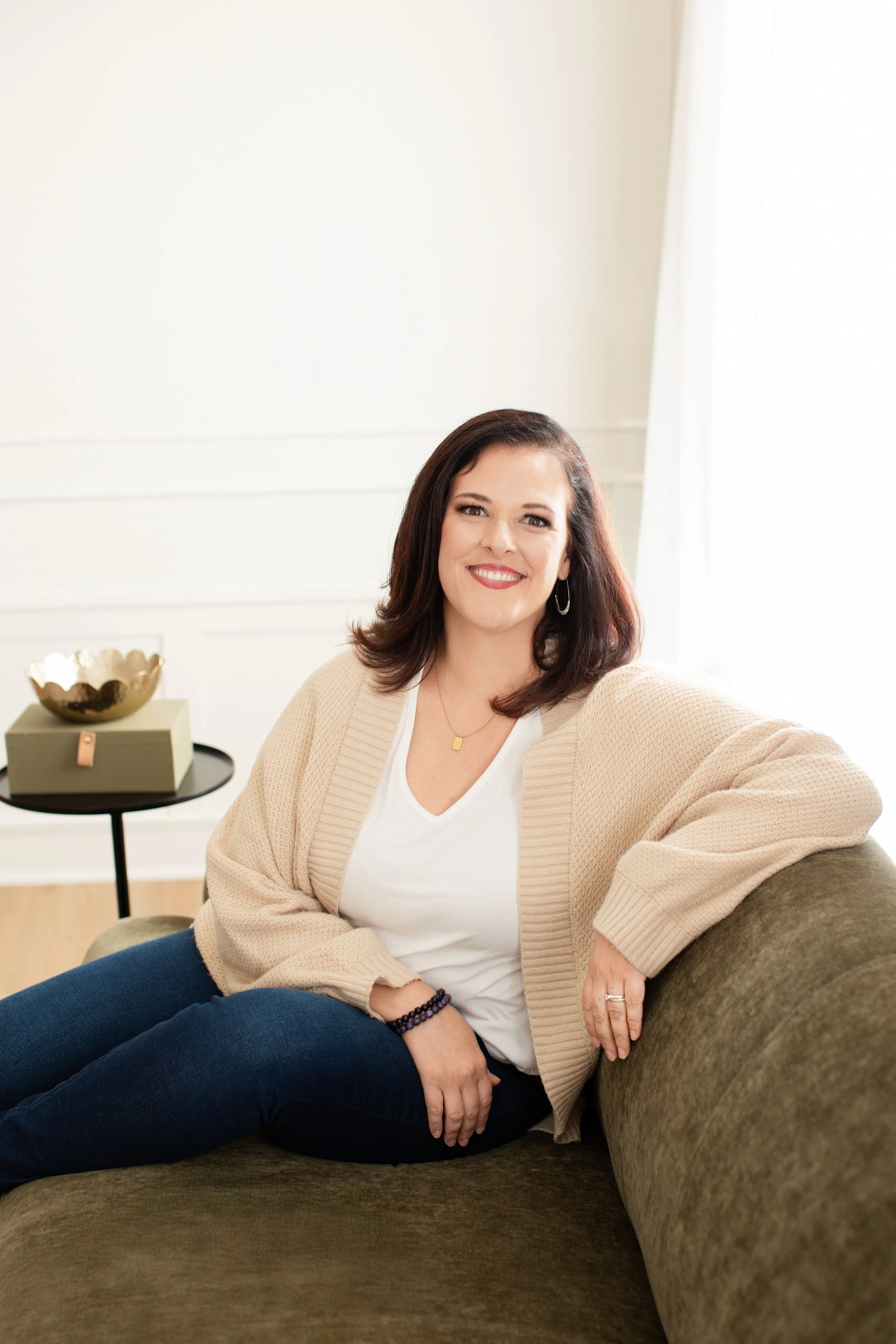
By Emma Mulvany | Women's Empowerment Mentor
There's this thing I used to do.
When life got hard (or as I’ve called it lately, “squeezy”), when my calendar felt too full, my body too tired, my nervous system too stretched - I would bail.
Often dramatically. Sometimes more subtly. But it always called for some form of “clearing the decks” And was always accompanied by guilt.
I'd look at my commitments, the white-space-less calendar and think, I can't do this. It all has to go.
And what always went first? The things that mattered most to me. The things I worked hardest for, cared about, and made me feel like myself. The dreams I was building toward. The spaces I actually wanted to show up in.
I'd clear my calendar (completely), feel a flash of relief, and then…the familiar ache of wondering why I kept choosing smaller when I said I wanted more.
This past quarter has been one of the most intense of my life.
Business has been on fire - new projects launching, refinements finally taking shape, external accountability at an all-time high.
It's also been relentless in other ways. A four-week flu that knocked me flat. Endless rounds of kid sickness and injuries. The weight of current events pressing on my chest, the impulse to drop everything and do something pulling at me constantly.
At any given moment, my brain felt like it was fracturing into a million little pieces that would surely never fit back together.
In the past, I wouldn't have made it through this season. At least, not without abandoning every piece of myself in the process.
I would have looked at my January calendar - still recovering, still depleted, wondering when I’d feel like I could breathe again - and started editing. Canceling meetings. Backing out of agreements. Writing apologetic emails with one hand while the other clutched at relief like a lifeline.
But this year, I had something I didn't have before: awareness of the pattern.
What IFS taught me about my "bail" response
Thanks to Internal Family Systems (IFS), I could feel it happening in real time. I could sense the part of me that wanted to protect me from overwhelm - the one that has historically done that by shutting things down, narrowing my world, making everything smaller and safer.
In IFS, we call these firefighter parts. They're not villains. They're trying to help. They see the fire and their job is to put it out - fast. Even if that means dousing the things you actually care about in the process.
So when that part showed up this quarter - frantic, insistent, begging me to clear the decks - I didn't let it take over.
I sat with it.
I acknowledged it.
I gave it voice.
I heard its fear and saw its purpose.
I even gave it a name so I could stay in relationship with it. So it would know I really meant it when I said, your voice is always welcome here. (Its name is ‘E’, the Extinguisher, btw).
And then I chose differently.
I chose my dreams.
I chose my commitments.
I chose to honor what I want, what I'm building, what I've been aligning with.
Not because I'm superhuman. Not because I wanted some glory badge of honor for being “so busy”. Not because I suddenly had more capacity or energy or time (although I have to say, when you start doing this work, it does seem like capacity starts to magically expand. Hint: it’s not actually magic. But I digress).
But because I had a framework for meeting the part of me that wanted to run and I could hold it with compassion without letting it steer the ship.
That's what IFS gave me. Not a way to override my protective parts or muscle through them. A way to be with them so I could move forward with clarity instead of fear.
What it looks like when you actually stay
I'm so proud of how I've shown up.
There were so many moments where I wondered if my nervous system could handle it. Where I felt stretched thin, doubted myself, questioned if I was asking too much.
But I stayed.
And staying - really staying, not white-knuckling or performing or pretending - has changed something in me.
It's shown me that I can hold both the hard and the expansion. That I can be tired and still be committed. That showing up doesn't mean being "on" all the time - it means being honest, being present, and trusting that I have what it takes. (And dropping that damn performance energy, because y’all, that’s exhausting and probably something that is constantly draining you, too).
What I know now that I didn't know before
The parts of you that want to protect you aren't wrong.
They're scared. They're trying. They've kept you safe in the past, and they're not sure you can survive what's coming without their help.
But you don't have to let them run the show.
When you can meet those parts with curiosity instead of judgment - when you can listen to them, thank them, and then make a choice from your grounded, sovereign Self - you can actually heal the patterns that have been running on autopilot since childhood.
You stop abandoning yourself when things get hard.
You stop making your life smaller to feel safer.
You stop choosing relief over resilience.
And you start building the kind of life that doesn't require you to shrink.
This is the work I do with my clients.
Not the "push through it" kind of work. Not the "your mindset is the problem" kind of work.
The kind of work where you learn to meet all of yourself - the tired parts, the scared parts, the fierce parts, the ones that want to run and the ones that want to rise - with honesty and compassion.
Where you stop outsourcing your authority and start trusting the wisdom that's already inside you.
Where you don't have to choose between being soft and being strong, because you finally understand that you've always been both.
If this story landed for you - if you felt that ping of recognition, the me too rising in your chest - I want you to know: you don't have to keep choosing smaller.
You don't have to keep bailing when things get hard.
You don't have to keep wondering if you're built for the bigness you're craving.
You are.
And I'd be honored to walk with you as you remember. Let's chat.
Emma Mulvany
View my Bio
Frequently Asked Questions
What is Internal Family Systems (IFS)? Internal Family Systems is a therapeutic model developed by Dr. Richard Schwartz that views the mind as made up of multiple "parts," each with its own role and intention. Rather than suppressing or fighting these parts, IFS works to understand them and lead from a core state called the "Self" — characterized by curiosity, compassion, and calm.
What are firefighter parts in IFS? Firefighter parts are protective sub-personalities that respond to emotional pain or overwhelm by taking immediate, often impulsive action to make the discomfort stop — like canceling plans, withdrawing, numbing out, or self-sabotaging. They aren't "bad"; they're trying to help. The goal is not to eliminate them but to understand them and give them a less disruptive role.
Why doesn't insight alone create lasting change? Insight operates at the cognitive level, but most protective patterns are driven by the nervous system and by parts that formed long before we had language for our experiences. Until those parts feel genuinely heard and safe, they will continue to override our intellectual understanding. Embodied, root-cause work — like IFS — addresses the why behind the behavior, not just the behavior itself.
What does "closing the gap between knowing and living" mean? It refers to the experience of intellectually understanding what you need or want (boundaries, self-trust, confidence) but being unable to consistently act from that understanding. Closing the gap requires integration — nervous system safety, compassionate inner work, and repeated practice in real life.